
People ask me what they should read about money. Not textbooks. Nobody finishes those.
These are the twenty I'd lend to a friend. Some of them aren't investing books at all. They're about people, and what people do when there's money on the table, which is the bit that decides whether you end up rich or not.
I believe a £10 book can change your life. You can learn as much from a good one as you can from an expensive training course, or a financial adviser, and it’s a lot cheaper than paying their expensive fees.
If you buy through the links below I get a small commission from Amazon, the price you pay is unchanged.
Money and investing

The Psychology of Money — Morgan Housel
Start here. Housel's argument is that getting rich has very little to do with how clever you are and almost everything to do with how you behave when things go wrong. No maths, short chapters, and you can read it in a weekend. If you only buy one book on this list, buy this one.
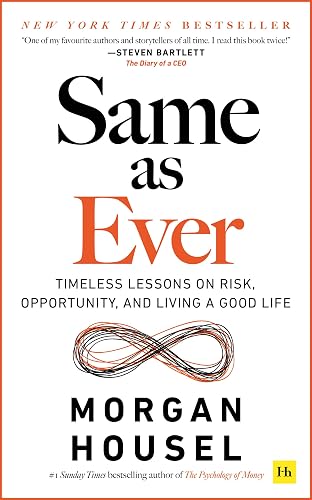
Same as Ever — Morgan Housel
The follow-up. Rather than trying to guess what's going to change, Housel looks at what never does: people get greedy, people panic, people overreact to the last thing that happened. Understand that and you've understood more about markets than most fund managers admit to.

The Little Book of Common Sense Investing — John C. Bogle
Bogle invented the index fund, and this is him explaining why a cheap tracker beats nearly every professional over time. It's short and it's blunt. The fund management industry has spent fifty years hoping you never read it.

A Random Walk Down Wall Street — Burton Malkiel
First published in 1973 and updated ever since. Malkiel goes through every way people try to beat the market — charts, tips, star managers, the lot — and shows with the numbers why none of it works for long. Once you've read it you stop feeling like you're missing something.

The Simple Path to Wealth — JL Collins
This began as letters Collins wrote to his daughter about money because she wasn't interested and he wanted her to be alright anyway. Buy a cheap index fund, keep buying it, don't sell, get on with your life. That's the whole plan, and he's good at explaining why it beats the complicated ones.

Die With Zero — Bill Perkins
Perkins made his money running a hedge fund and this is his case for spending it. Most of us save on autopilot, die with far more than we ever meant to, and leave it to children who are sixty by then and don't need it. His answer: spend on experiences while you're young enough to enjoy them, give the money away while it can still change someone's life, and aim to arrive at the end with nothing left. It's the opposite of every other book on this list, and it will change how you think about what all the saving is for.

The Millionaire Next Door — Thomas Stanley and William Danko
Two researchers set out to find America's millionaires and discovered most of them drive ordinary cars, live in ordinary houses and have never bought a boat. The flashy ones are usually in debt. Old now, still true.

Money: A User's Guide — Laura Whateley
The practical British one. ISAs, pensions, mortgages, tax, student loans, all explained for someone who has never had any of it explained. Not a book you read cover to cover. It's the one you pull off the shelf when a letter arrives and you don't know what it means.
The good stories

Liar's Poker — Michael Lewis
Lewis worked as a bond salesman at Salomon Brothers in the eighties and wrote down what he saw. He meant it as a warning about how the City and Wall Street really work. Plenty of graduates read it and applied for jobs. Still the funniest book about finance there is.

The Big Short — Michael Lewis
The 2008 crash, told through the handful of oddballs who saw it coming and bet against the banks. You'll come out knowing what a mortgage bond is and why a triple-A rating is worth exactly what you paid for it. Better than the film, and the film was good.

Flash Boys — Michael Lewis
How the stock market ended up being run by computers trading in millionths of a second, and the small group who tried to do something about it. If you trade every day, it's alarming. If you buy a tracker once a month and leave it alone, none of it touches you, which is rather the point.

Barbarians at the Gate — Bryan Burrough and John Helyar
The fight for RJR Nabisco in 1988, at the time the biggest takeover there had ever been. Egos, private jets, bankers falling over each other to borrow more. It's long. You won't notice.
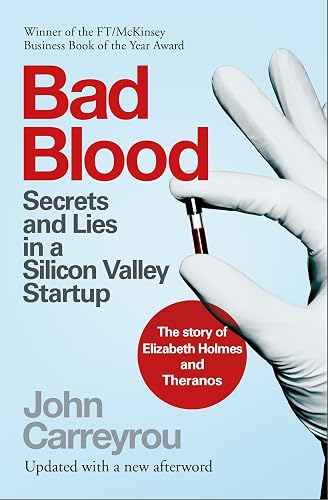
Bad Blood — John Carreyrou
Theranos raised hundreds of millions of dollars for a blood-testing machine that never worked, from some of the richest and best-advised people in the world. They all backed the story instead of checking the product. That happens in investing far more often than anyone likes to say.

Too Big to Fail — Andrew Ross Sorkin
The 2008 crisis from inside the rooms. Sorkin got the bankers and the regulators to tell him what happened hour by hour, including the three in the morning phone calls. It reads like a thriller and every word of it happened.
How people behave around money

Thinking, Fast and Slow — Daniel Kahneman
Kahneman won the Nobel prize for showing that people are predictably irrational about risk and money, and this is his own account of the work. It's harder going than the rest of the list. Stick with it. You'll recognise yourself on every other page, and that's the point.

Nudge — Richard Thaler and Cass Sunstein
Why does auto-enrolment work when telling people to save doesn't? Because we do whatever the default is. This book explains how to set your own defaults so they work for you: set up the direct debit, then stop thinking about it.
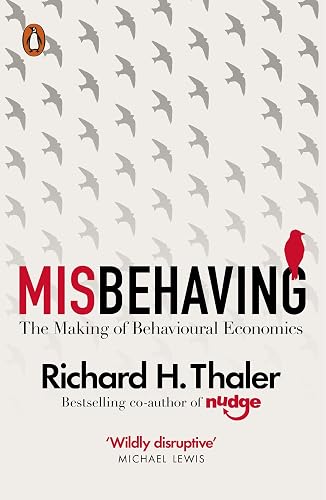
Misbehaving — Richard Thaler
Thaler's own story of a career spent annoying economists by pointing out that real people don't behave like their models. Same ideas as Kahneman, much easier to read, and funnier.

Fooled by Randomness — Nassim Nicholas Taleb
Taleb's point is that the trader with the brilliant ten-year record is very often just lucky, and you can't tell the difference until he blows up. He's rude about almost everyone. On this he's right.
Two from further afield

Extraordinary Popular Delusions and the Madness of Crowds — Charles Mackay
Written in 1841. Tulip bulbs, the South Sea Bubble, alchemy. Every mania since, dot-com and crypto included, has followed the script Mackay set down nearly two hundred years ago. People don't change.

Sapiens — Yuval Noah Harari
Not a money book, but the chapter on money is the best explanation I've read of what's in your bank account: a piece of paper, or a number on a screen, that's worth something only because everyone has agreed it is. Worth the price for that chapter alone.
None of these books will make you rich on their own, but they may stop you doing the things that make people poor.
As an Amazon Associate I earn from qualifying purchases.
I am not a financial adviser. Nothing here is personal financial advice. Please do your own research before making any investment decisions.